How to make a hexaflexagon
Hexaflexagon: try all 3 steps in the 3D player. Turn and replay every move. Print the complete diagram sheet or save it as PDF.
A strip of ten triangles folds into a flat hexagon that can be flexed to show a different face. Fold every third line, then glue the last triangle to the first.
- You need
- One strip of paper or thin card 2.6 × 15 cm, glue and a pencil.
- Start
- Mark a strip 2.6 cm wide and 15 cm long along its long edges into ten triangles with 3 cm sides: points every 3 cm along the bottom edge, points halfway between them along the top edge, and slanted lines joining them zigzag. Cut the strip to its outline, with slanted ends, and crease every slanted line.
- Tips
- Crease every line first so each fold falls in place.
- Colour or number the two sides of the strip before folding to follow the faces as you flex.
- Thin card holds the hexagon flat; heavy paper is stiff to flex.
Your model is ready
Glue the last triangle to the first, press until dry, and the hexagon is made. To flex it, pinch two opposite corners towards each other until the hexagon folds into a triangle, then open it out from the middle; a different face of the strip comes to the front. The finished hexagon, with its triangular faces meeting at the middle.


Step-by-step diagrams
- 1
Fold the strip back at the third line
Fold the right part of the strip over to the left along the third slanted line, so the fourth triangle lies on the third.
- 2
Fold the end back at the new sixth line
Fold the part beyond the next slanted line (the sixth) over the same way, so the strip bends into a zigzag.
- 3
Fold the tab under the ninth triangle
Fold the last triangle over the same way. The ten triangles now sit in a hexagon, and the last triangle lies on the first.
- ✓
Finish
Glue the last triangle to the first, press until dry, and the hexagon is made. To flex it, pinch two opposite corners towards each other until the hexagon folds into a triangle, then open it out from the middle; a different face of the strip comes to the front. The finished hexagon, with its triangular faces meeting at the middle.
Fold next

Paper banger ↗
The traditional single-pocket paper popper: fold a long rectangle into a triangle that pops when snapped downward.
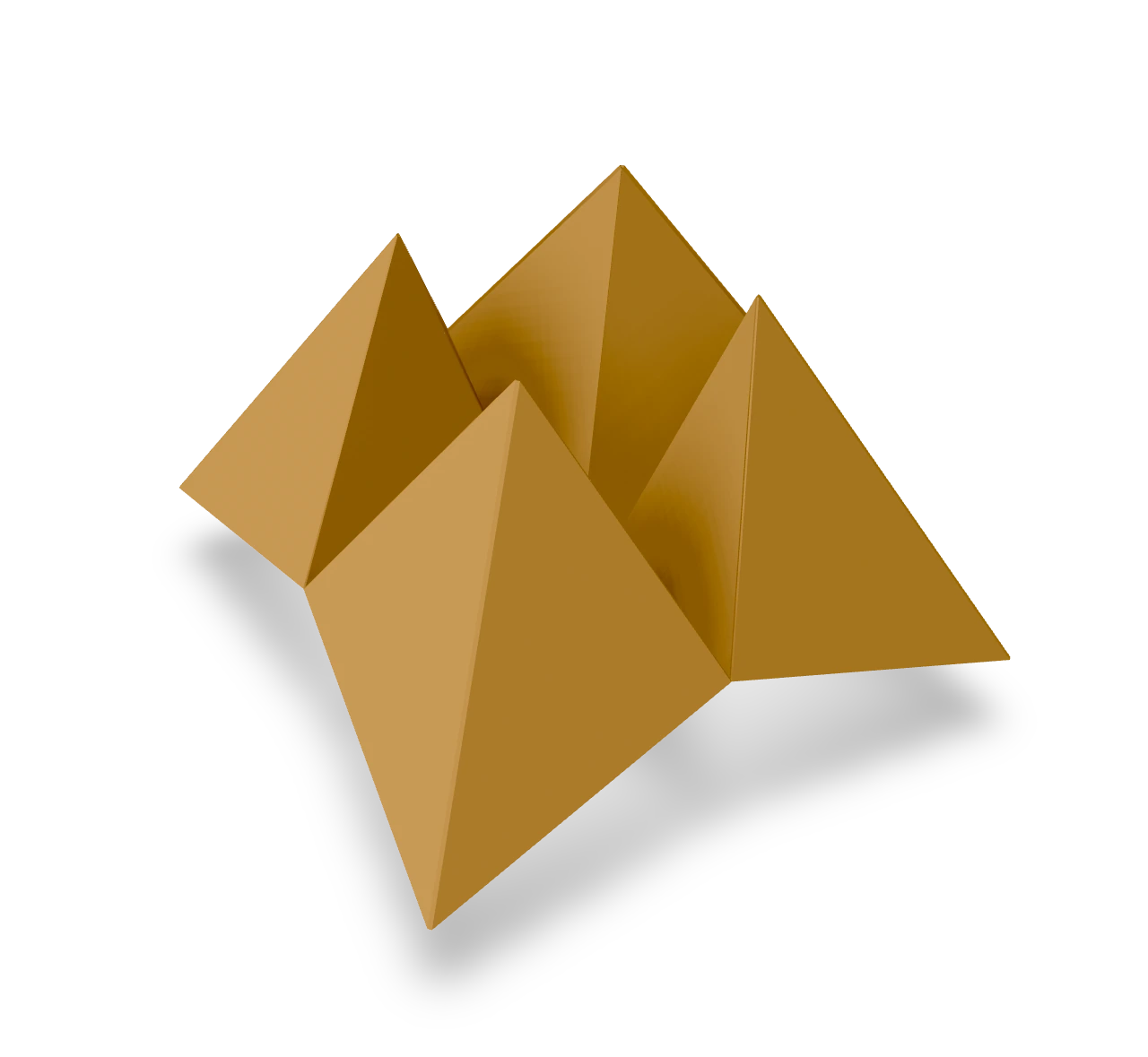
Fortune teller ↗
A fortune teller, or cootie catcher, is a paper choosing game worked by two thumbs and two forefingers. Two rounds of corner folds make the pockets; the last creases let them open in alternating directions.
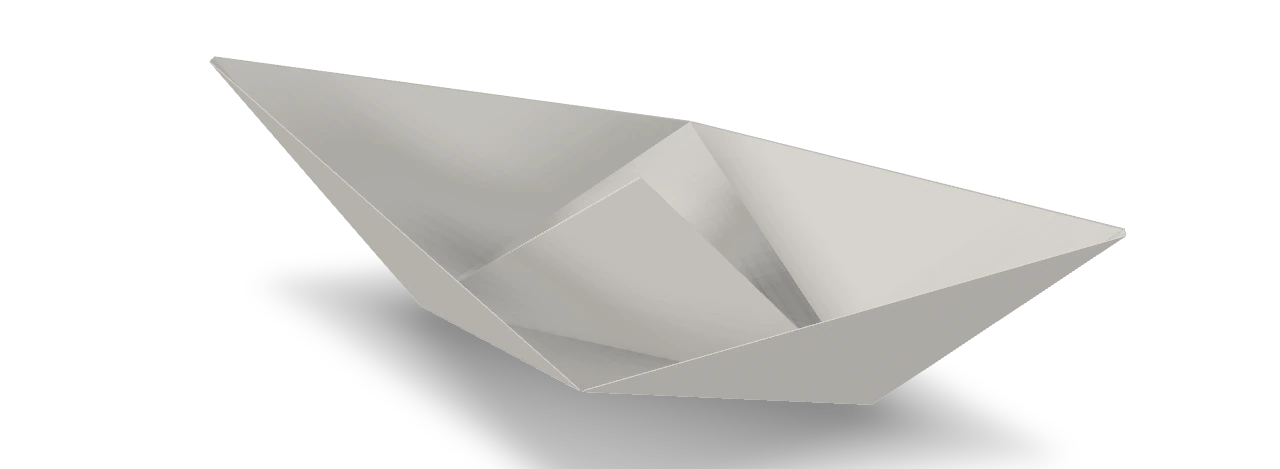
Paper boat ↗
The traditional paper boat, folded from a rectangle through a newspaper hat and two pockets.

Windmill ↗
Fold the traditional uncut, single-color pinwheel with four flat blades from one square.